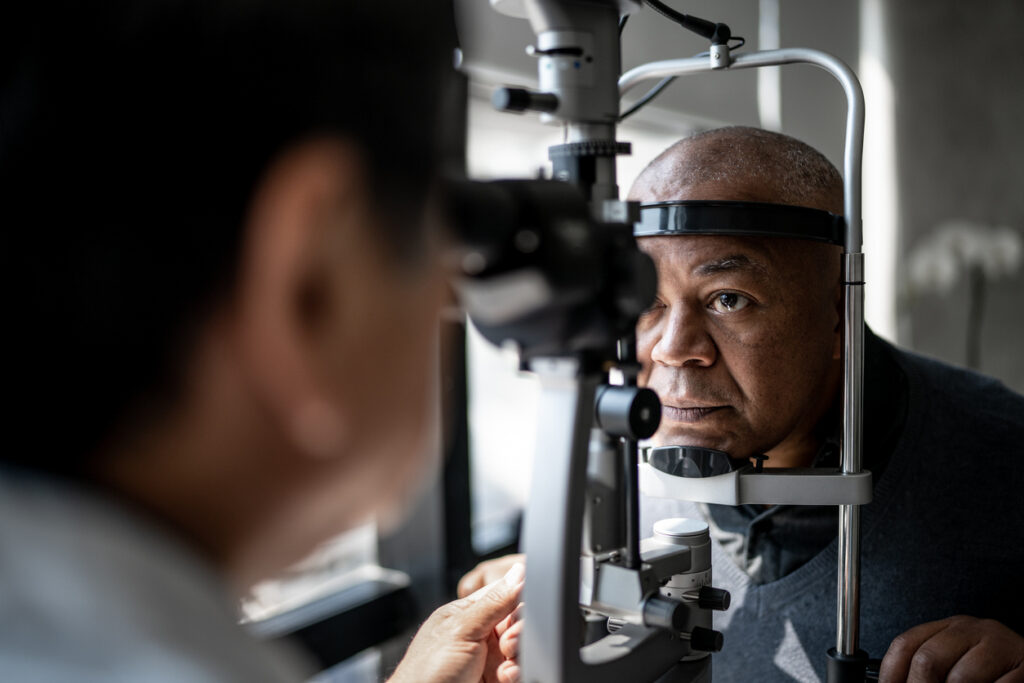
Finding out you have cataracts doesn’t automatically mean surgery is next. You might still get along fine with glasses, or notice that familiar activities take more effort. When we discuss cataract surgery at Milwaukee Eye Surgeons in Brookfield, WI, we look at what has changed for you and what your exam shows. Our founder, Kenneth Weinlander, MD, is a board-certified ophthalmologist and fellowship-trained cornea specialist.
Signs Surgery May Help
Think about changes in your routine, not just the letters on an eye chart. Signs worth mentioning include:
- Driving feels less safe. Glare from headlights makes you avoid going out after dark.
- Updated glasses aren’t enough. Reading labels or doing detailed work still takes extra effort.
- You’re changing your plans. Shopping, hobbies, or other familiar tasks have become frustrating.
You might have noticed smaller changes before these disruptions. Our guide to early signs of cataracts explains what those first symptoms can look like.
When Waiting Makes Sense
If updated glasses and brighter lighting still let you manage comfortably, we may recommend monitoring your cataracts with regular eye exams. The condition usually develops gradually, and there’s no single stage at which everyone needs surgery. You also don’t need to wait until a cataract is “ripe” or vision is severely reduced. The balance shifts when glare or blur begins limiting your activities despite updated lenses.
Questions for Your Exam
A comprehensive eye exam helps determine whether the cataract explains your symptoms or if another eye condition is contributing. We review your medical history, prescription, and eye health before discussing whether treatment is likely to make a meaningful difference in your daily routine. Consider asking:
- Is the cataract causing most of my trouble, or could something else be involved?
- Would another prescription help for now?
- What improvement might I expect, and what would surgery not correct?
- What changes should prompt a return visit if I decide to wait?
Bring examples of when your eyesight causes problems so we can discuss the specific activities you want to get back to.
If You Choose Surgery
The cloudy natural lens is removed and replaced with an artificial one. Our guide to artificial lens options introduces the implants patients may discuss before treatment. Dr. Weinlander performs both traditional and laser-assisted cataract surgery in our office-based surgical suite in Brookfield. During planning, we’ll review the recommended technique, potential risks, and whether glasses may still be needed afterward.
Cataract Care in Brookfield
If the right time still feels uncertain, an evaluation can help you sort through the options. Contact us at Milwaukee Eye Surgeons in Brookfield, WI, or call 414-377-5550 to request an evaluation with Dr. Weinlander.